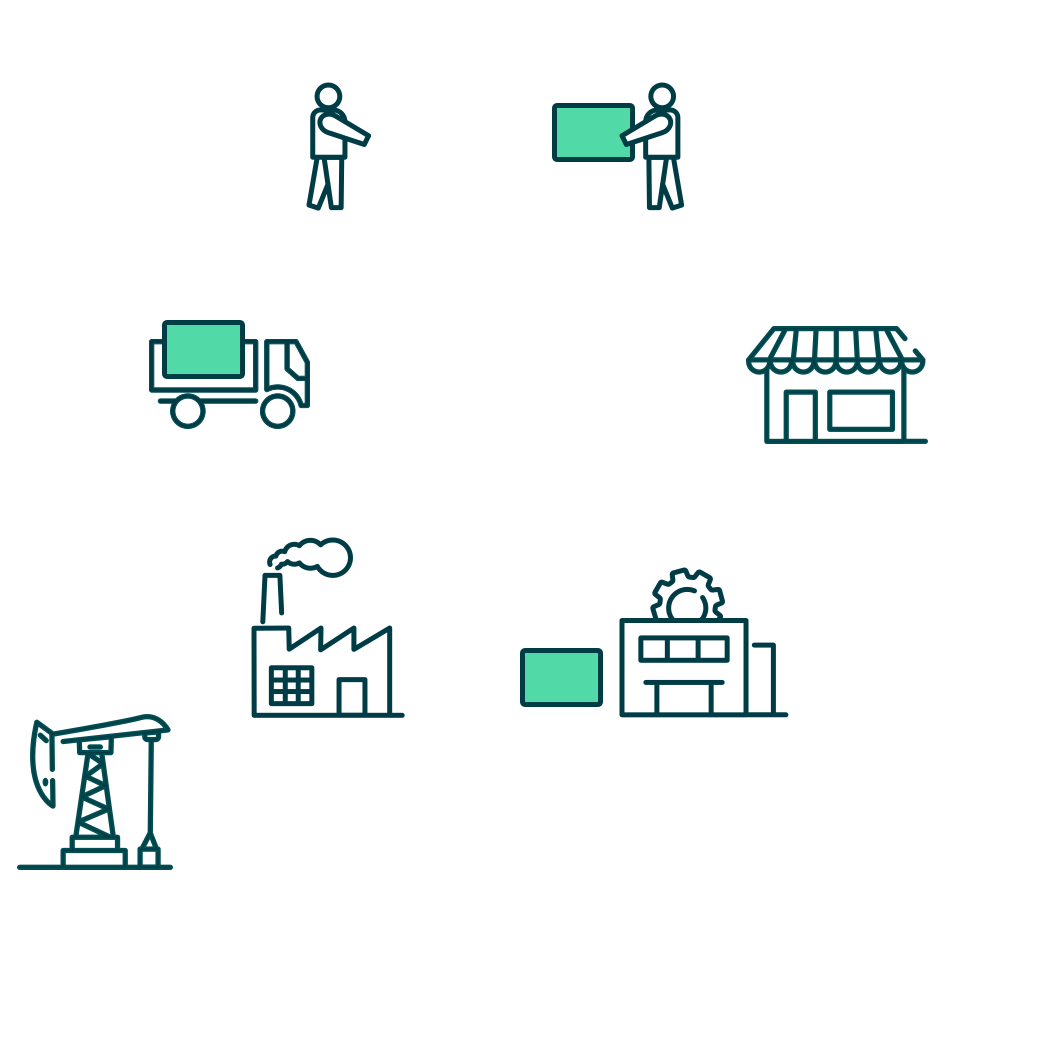
People run in circles, while the economy runs linear.
Isn’t that the wrong way round?
↗ Resilience
As we all agreed, that value matters to us, there are several ways to retain it. Many strategies are out there to get closer to something called resilience. The Circular Economy as a concept offers a wide range of opportunities to keep the value of products and materials in the circle, which generates economic value for you and your organisation. And it also creates environmental benefits as a „by-product“. Sounds good, doesn’t it?
Main strategies
for circular business models
Sell access rather
than ownership
Ownership becomes usership. You don’t sell physical products anymore, but you sell the access with e. g. a rental or sharing business model.
Monetise product
life extension
To keep products and materials in the circle for as long as possible, you offer for instance repair and maintenance services or you create a second hand marketplace.
Value circular
inputs
Manufacturing with used/secondary raw materials or even with by-products. This reduces the depletion of primary resources, has therefore mostly a positive impact on the environment and helps to create resilience against value-chain disruption and price-volatility.
↗ My offer
Circular Economy & Strategies Workshop
Detailed information about the principles, strategies and how to get into action.
Circular Business Model Workshop
Ideate together with an interdisciplinary team and think through all circular business model patterns to evaluate the biggest opportunity for your business.
Product Service Systems (PSS) Workshop
How they work and how to avoid major pitfalls that you should avoid upfront to save time & money.
The goods of today are the resources of tomorrow at yesterday’s prices.
Walter R. Stahel